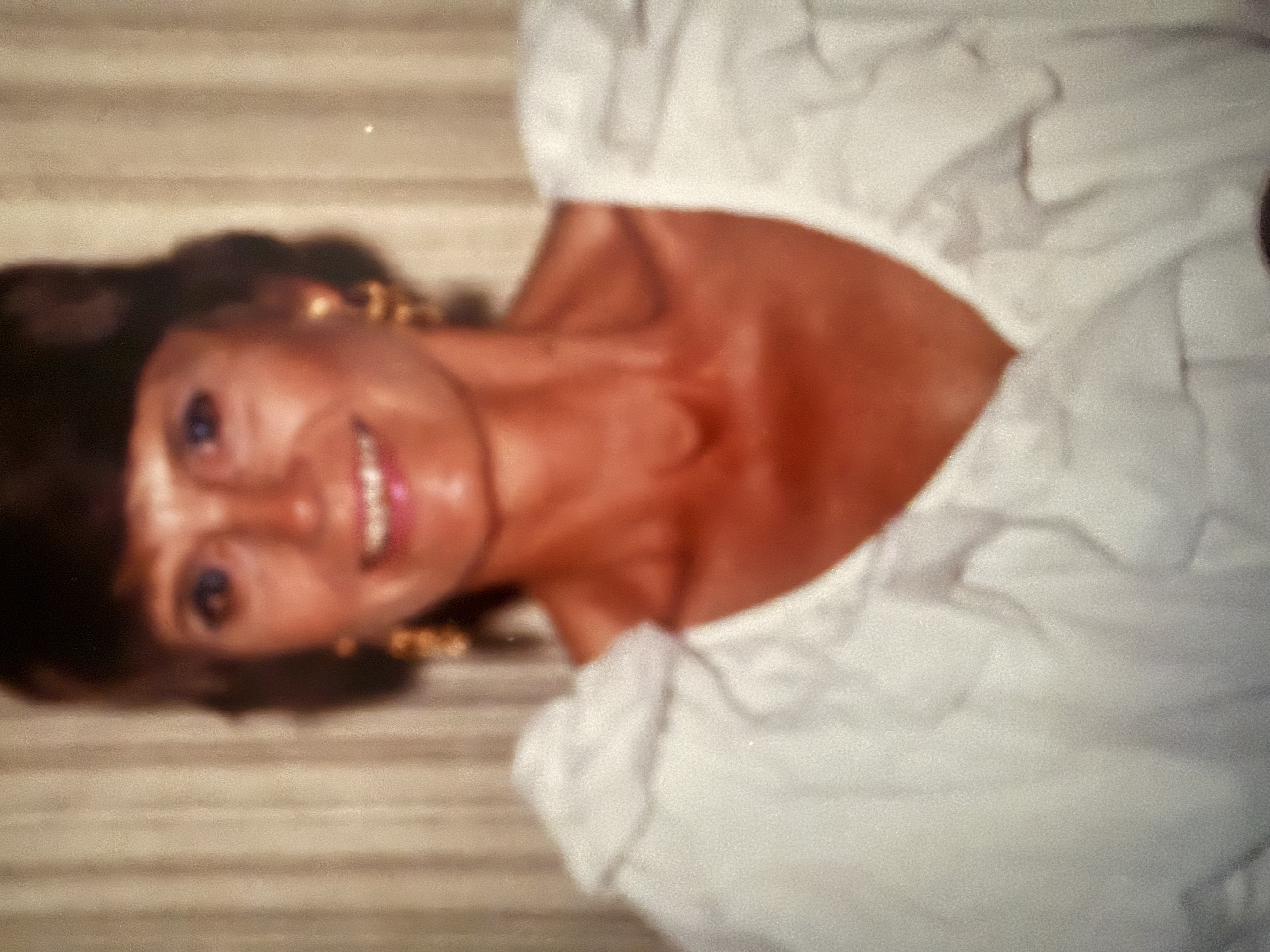
— a life remembered —
In loving memory

Nana,
in her own
words.

October 27, 1927 · Shrewsbury, Vermont

Born in a farmhouse during the flood of '27. Delivered by a country doctor. The youngest of four. This is a small collection of stories she told, saved so they can keep being told.

Nana

The shape of her years.

1927
Born
In Shrewsbury, Vermont — on the farm, during the flood.
1945 – 49
College
Castleton State Teachers College. Cleaned halls at 5:30 AM for her room and board.
1953
Met Allan
A Christmas dance in Vermont. Married three and a half months later.
1950s – 60s
Raleigh & Richmond
Five children. A first house for $14,750. A mortgage of $75 a month.
1970
Florida
Marketed Innisbrook. Raised the younger two in Largo.
1983
Massachusetts
Moved north with John. Travelled with her sisters every year after.

The moments that stayed with her.

i.
Childhood · Vermont

The flood of '27.

I was born October 27th, 1927, and there was a flood that year. So I was born in the flood of '27 — in Shrewsbury, Vermont, on the farm, delivered by a country doctor.

The youngest of four, four years behind the next. Country games. Skating on the river. A playhouse under the crabapple tree, and red water left over whenever her mother cooked beets.

ii.
The Depression

A good time in a little village.

During the Depression, my father didn't have a job, but neither myself nor Jane can remember an unpleasant thing. We had a good time in a little village. There was no family who was way above us. We were always just accepted everywhere.

Her mother could do everything — sewed for money, cooked, sang. "It's no wonder we turned out the way we did."

iii.
1953 · Meeting Allan

Three and a half months.

I knew the first time I went out with him, if he ever asked me to marry him, that was the one.

She nearly didn't go to the Christmas dance where they met — she wanted to stay in New Boston with her sister. Her mother insisted she keep her word. Allan said hello. Two days later he called. Three and a half months later they were married in the Air Force Chapel at Fort Bragg, with only his friend Steve Strauss and Steve's wife as witnesses.

iv.
Early Marriage

A first house for fourteen-seven-fifty.

We bought our first house there for $14,750. It was a lovely house in Cardinal Hills… our mortgage was $75 a month. We got it through the GI Bill.

Raleigh, then Richmond. Five children between the two cities. Allan travelled for American Cyanamid. She sewed cheerleading outfits, led Girl Scouts, and remembered twenty-two years at home with small children before John finally reached kindergarten.

v.
1970 · Florida

A job on an airplane.

Allan had gone down to Florida to see his Aunt Rachel, and on the plane he ran into a man developing a condominium product with a golf course named Innisbrook. Allan got the job of marketing it just through that little trip.

In 1970 the family moved to Largo, between Clearwater and St. Petersburg. John was three. Lynn was a junior in high school. Lauren had just made the freshman cheerleading squad and her mother sold the uniforms she'd sewn to the girl who took her place.

vi.
Later years

You do.

Either you stay home and feel sorry for yourself, and oh, my children are gone — or you get out and do things. You do.

She took tennis lessons she was terrible at. Played bridge. Travelled with her sisters Jane and Zoa every year — British Columbia, the Panama Canal, anywhere she could book. She kept doing this, by her own quiet design, for the rest of her life.

Listen to Nana, in her own words.

The original recordings from January 2012 — two afternoons of conversation, saved so her voice can keep being heard.

Open the set on SoundCloud →

The full transcripts.

Two interviews, recorded in January 2012, shortly before she left Colorado after her yearly Christmas visit. Click to read them through.

Part one · Childhood, college, meeting Allan

Where were you born, and when?

I was born October 27th, 1927, and there was a flood that year. So I was born in the flood of '27. I was born in Shrewsbury, Vermont, on the farm, delivered by a country doctor who delivered my other three siblings, Dr. Martin.

I'm the youngest of four. I was four years younger than the next one. I don't remember much about my siblings until I reached high school and college, really, as far as doing things with them. But I remember wonderful play times.

What games did you play growing up?

We played all kinds of country games. We did sliding in the winter on Town Hill — that was wonderful. One person had to watch out for cars because we slid on Main Street. We went skating on the river. I used to build snow forts outside and play outside by the hour. In the summer, I had a wonderful outside playhouse under the crabapple tree, and I loved it when my mother cooked beets because then I had red water. Any old dishes my mother didn't use, I could have.

What was family life like?

It was amazing. During the Depression, my father didn't have a job, but neither myself nor Jane — who was my next sibling — can remember an unpleasant thing. Now, that's amazing. We had a good time in a little village. There was no family who was way above us. We were always just accepted everywhere.

My brother was like an older person whom I admired very much. He was eight years older than I was, and he kind of favored me. He fought very much with my sister Jane. He and Zoa got along fine, but he and Jane used to fight — really fight. Jane got so mad at him one time, she threw a fork at him, and it landed in the wall over his head.

Tell me about your mother.

My mother was absolutely marvelous. It's no wonder we turned out the way we did. She was strict, but very understanding, had a great sense of humor. We all feel so much in debt to her. She could do everything. She sewed — took in sewing for money. She was the best cook I've ever seen. She could sing. She was very talented. She was from Plymouth, Vermont.

What did you do after college?

I went to Castleton State Teachers College in Castleton, Vermont — four years. The first two years, I got up at 5:30 in the morning and cleaned halls for my room and board. Every day. Then, because I did a lot in school — head of this and that, president of this and that, and I acted — I got a better job on the desk at the dorm. That was a cushy job. You got to sit down.

I finished school with practically a 4.0 average. They don't usually give out awards there, but I got the highest award there was — Omicron Sigma.

Did you have boyfriends in college?

Several. I had a good time. My first date in high school was with Merritt Edson — he was shorter than I was, and his mother drove us to the freshman reception. I dated Harry Wiggins. And when I was a senior, I dated Dick Maxon. He went to Norwich, a military school, so we had a couple of weekends up there. I had my sister's fur coat to wear.

How did you meet Allan?

I was teaching at Lincoln School in the fourth grade in Rutland, Vermont, living with a gal named Ruth Allen — we called her Twerp. Neither of us had a car, so we walked everywhere.

One Christmas, I went down to visit my sister Zoa in New Boston, Massachusetts. Before I'd gone, a gentleman named Raymond Johnson had asked me to a Christmas dance. I was having such a nice time in New Boston, I didn't want to come home to go to the dance, but my mother said, "If you have agreed to go with someone, you really should." So I came home. And there was a man in military uniform at the dance that I had known in high school — not really known, but I knew who he was. He said hello to me. It happened to be Allan Snyder.

Two days later I got a phone call. He had called my mother to find out where I lived. Three and a half months later, we were married.

How did you know so fast?

I knew the first time I went out with him, if he ever asked me to marry him, that was the one. You know how that is.

Tell me about the wedding.

He called me because he was going to have a good leave and had just gotten a lot of money for some pay. I took a train down — I had to take time off from teaching, and couldn't go unless they found a substitute. He met me, and the next day we were married. In the Air Force Chapel at Fort Bragg. Just his friend Steve Strauss and Steve's wife, Bernie. That was it.

My father said, "Oh, he's just swept you off your feet. You don't know what you're doing." But I was twenty-five then. I'd been around.

What happened after you got married?

We were married in March in North Carolina. His regiment was going to Panama, so I drove the car home, finished teaching. Then we drove across the country, the southern route. I was pregnant with Lynn. Two weeks before he was going to go overseas, Lynn was born. He got leave. And when she was two weeks old, he was sent over to Korea.

He was an officer, more of a teacher, but he did have to go out on patrol. Before they went out, they sat in a dark room for twenty minutes to get used to it. What was really fun for him was making an officer's club from scratch — bar and all.

What happened when Allan came home?

He went back to school. I went back teaching in Vermont, and my mother took care of Lynn. After he graduated, he got a job with a drug company. His first territory was Vermont, so we got an apartment in Rutland. Then he was sent to Raleigh, North Carolina, for two years. We bought our first house there for $14,750. It was a lovely house in Cardinal Hills. Our mortgage was $75 a month — we got it through the GI Bill.

Then we moved to Richmond, Virginia, where we stayed for ten years. All five of my children were born between Raleigh and Richmond, except Lynn, who was born at Fort Ord in California.
Part two · Richmond, Florida, and after

Tell me about Richmond.

Our first house was a three-bedroom on Blythwood Drive. A lovely street, lovely neighbors. My oldest daughter Lynn became lifelong friends with the little girl next door, Becky, whose father was a Lutheran minister. I can remember the first day of school when she went out and got on the school bus. When your first child goes away to school, it's really a very — you tear up. And then after a minute, you think: oh, I still have four children.

When we moved to Penrose Drive, into the house Allan built, I had help for the first time regularly. I was amazed — I expected to say, "Clean this," but you really had to oversee it, tell them exactly what you wanted, week after week. It was almost more work having them around than doing it myself.

How did you end up in Florida?

Allan had gone down to see his Aunt Rachel. On the plane he ran into a man developing a condominium product with a golf course named Innisbrook, and Allan got the job of marketing it just through that little trip. So in 1970 we moved to Florida — to a little town called Largo, between Clearwater and St. Petersburg.

That year Lynn was a junior in high school — big woman on campus — and she had to move in the middle of her junior year. Lauren had just made the freshman cheerleading squad. The uniforms I'd sewn for her, I had to sell to the girl who took her place. That's tough.

How did you feel about leaving Virginia?

You go where your husband is going to earn a living. The children felt worse. But I liked Florida from the beginning. We had a nice house in a nice neighborhood. I met some nice friends.

It was a different culture. Richmond was a real Southern town — capital of the Confederacy. Florida was very transient. You didn't find the old, old families like you do in Richmond. We never got friendly with anyone from an old family, like the Lees or the Jeffersons. People came in to work and be salesmen, so we had a lot of friends.

What was a normal day like?

Routine. You'd get up, get the kids off to school, do the washing, go to the store, plan what you're going to have for dinner, come home, maybe do the ironing. When David was in football, I had to wash his clothes every night. Mimi played soccer. John played soccer and baseball. I went to all their games. I became one of the big wigs in the food stamp — I even have a plaque about it.

What was it like when the older kids started leaving home?

I started developing other interests. Either you stay home and feel sorry for yourself — oh, my children are gone — or you get out and do things. When John finally reached kindergarten, I had been home with children for twenty-two years. He went to kindergarten, I had two and a half hours free in the morning, and the first thing I did was take tennis lessons. I was terrible, but I met friends.

Twenty-two years home with little children. And I never had family nearby to help me.

What changed between you and Allan?

We grew apart. Allan was away a lot, and he wanted a different type of life. He wanted to be the playboy of the Western world. I like things structured. I like to know. I didn't like that kind of life. Neither of us had any animosity toward the other — we were good friends. We even went on a trip together after we were separated and divorced.

We were separated in 1983 and divorced in 1985.

What was life in Massachusetts like?

I moved to Massachusetts and John moved with me. He was a junior in high school. My sister Jane and Zoa were there, so it was fun. Later, John left, I moved to an apartment, and my sister had an apartment in the same building. Zoa and I did a lot of things. Jane, Zoa, and I always took one trip together every year, which I arranged.

Our very first trip was a cruise with Zoa. I read about it in the paper — they still had an opening through the Panama Canal. It was wonderful. I've had a love of cruising ever since.

Have you dated since?

Nobody I was interested in. I had no intention of ever marrying again. I have a very nice life. I have children, I have grandchildren, and I can travel. I can do just as I want to.

Either you stay home and feel sorry for yourself — or you get out and do things. You do.
— Nana